Habeas Corpus: the right to be seen
Introduction
What is habeas corpus?
It’s basically a legal protection against being detained unfairly.
“Habeas corpus” is Latin for “you shall have the body.”
In modern terms, it means:
👉 If the State arrests or detains you, they must justify it in front of a judge.
👉 You have the right to challenge your detention quickly.
👉 Authorities cannot lock someone away without giving legal reasons.
It’s one of the oldest human-rights protections we have.
How it works — simple steps
Here’s the practical flow:
Someone is detained (arrested, imprisoned, or held without charges).
A request for habeas corpus is filed, basically asking:
“Why is this person locked up? Show the legal basis.”
A judge reviews the case fast; this process is meant to be urgent.
If the detention is unlawful, the judge orders release.
It’s a safety valve against abuse of power.
Alternative perspectives/nuances
It's not about whether someone is innocent or guilty; it’s purely about legal fairness.
Historically, it derives from English common law and has become a cornerstone of democracy, inspiring modern constitutions.
Countries sometimes suspend habeas corpus during wartime or emergencies, which is always controversial because it hands extraordinary power to governments.
Practical summary
Habeas corpus = “Prove why I’m being held.”
It protects individuals from:
✔ secret imprisonment
✔ indefinite detention
✔ arbitrary arrest
✔ state abuse
It’s essentially a shield for personal freedom, one of the fundamental pillars of a free society.
Essay
Habeas corpus is often framed as an abstract legal concept.
In reality, it is something far more physical.
It begins with a body.
A presence that must be acknowledged.
A demand that power explain itself.
This visual essay explores habeas corpus not through law, but through atmosphere, absence, and time. It traces how rights are rarely removed outright, and instead softened by procedure, delayed by bureaucracy, and reframed as temporary measures.
This is not a historical analysis.
It is a meditation on erosion.
Habeas corpus is not just a legal principle; it is a visible protection.
When the State must “produce the body,” power is forced into the light.
Narrative arc (5 movements):
The Body - presence vs disappearance
The Question - “By what right?”
The Delay - time as a weapon
The Exception - safety language replacing law
The Silence - erosion without abolition
This arc mirrors how rights decay without a coup.
The Body
Produce the body
Before there is law, there is presence.
Habeas corpus begins with a physical insistence: produce the body.
Not the file.
Not the charge.
Not the narrative.
The body.
In its original form, the writ compels authority to bring a detained person before a court. It forces visibility. It rejects disappearance.
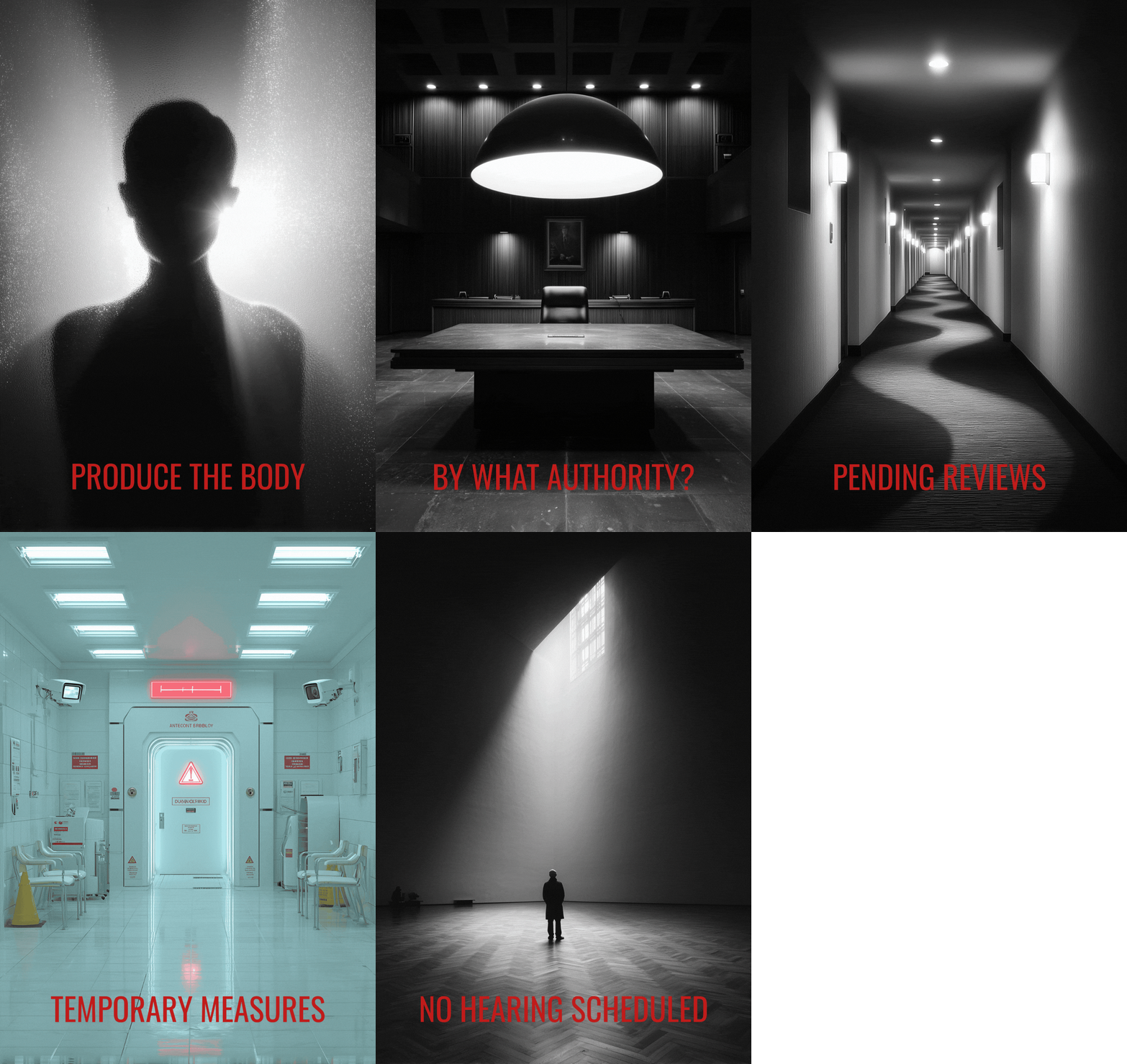
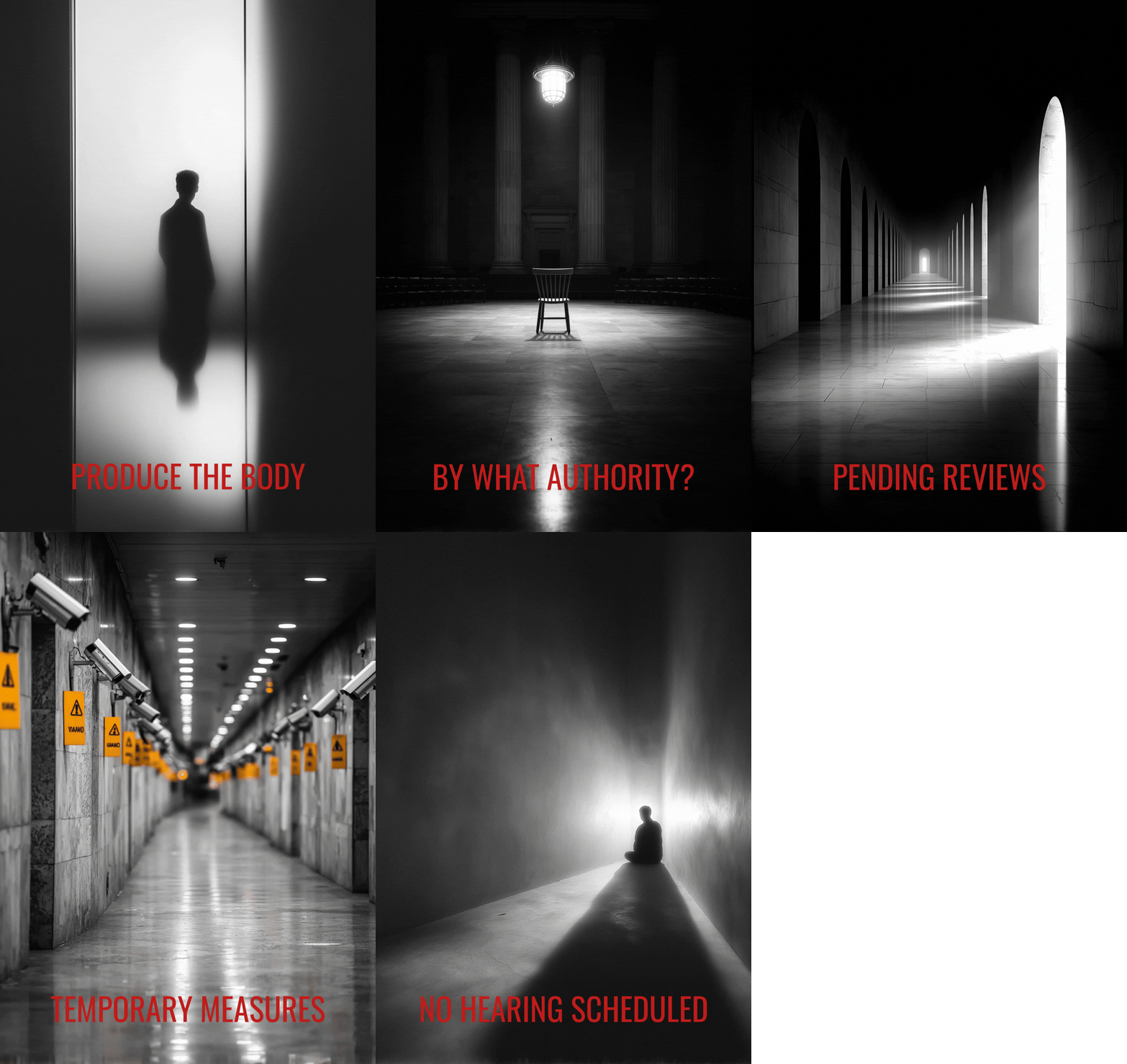
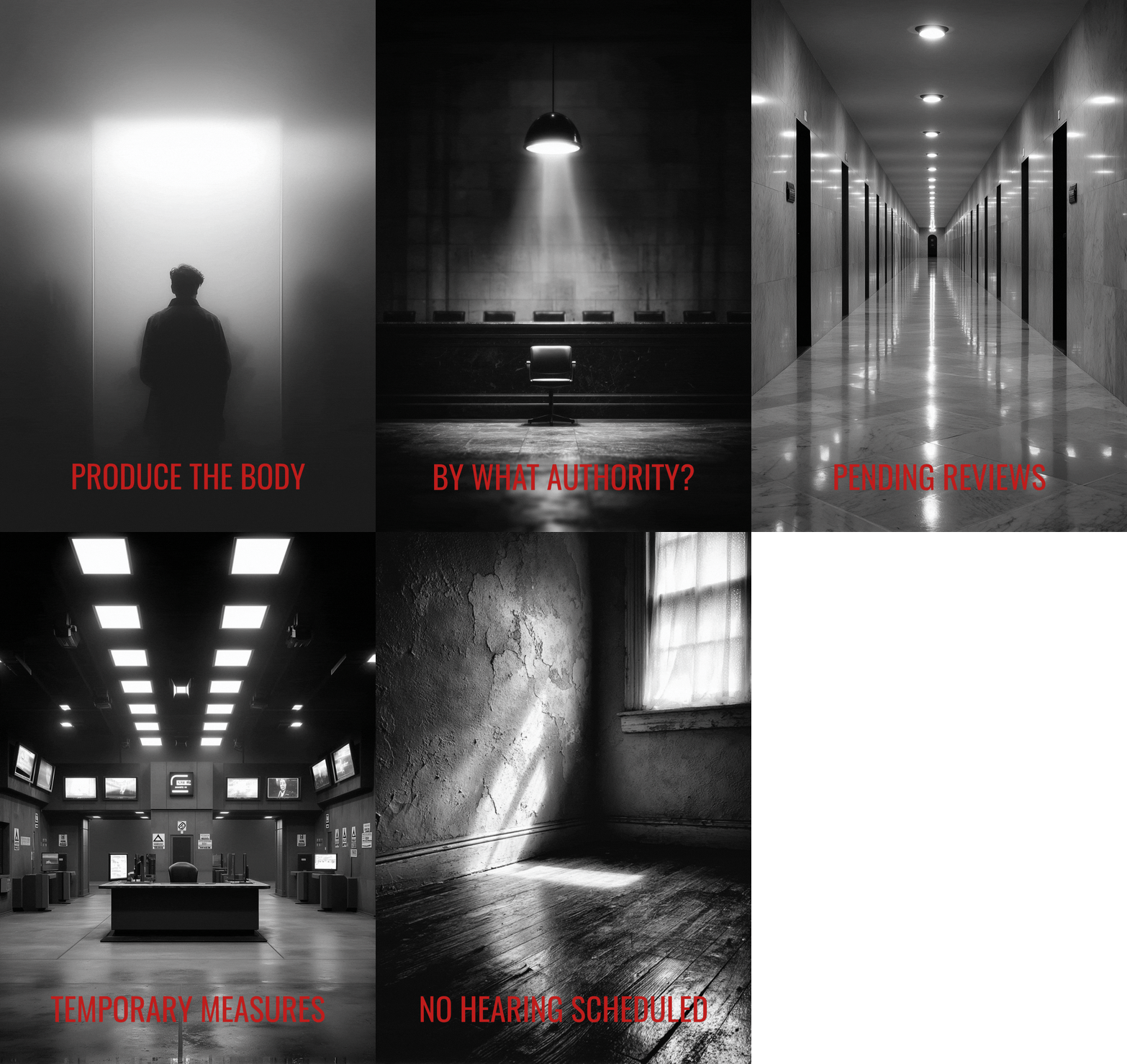
The images in this section depict silhouettes behind glass, figures suspended between shadow and illumination. The individual exists, but only barely — outlined by institutional light.
The demand is simple and radical:
If you have taken someone, show them.
Everything else follows from that moment.
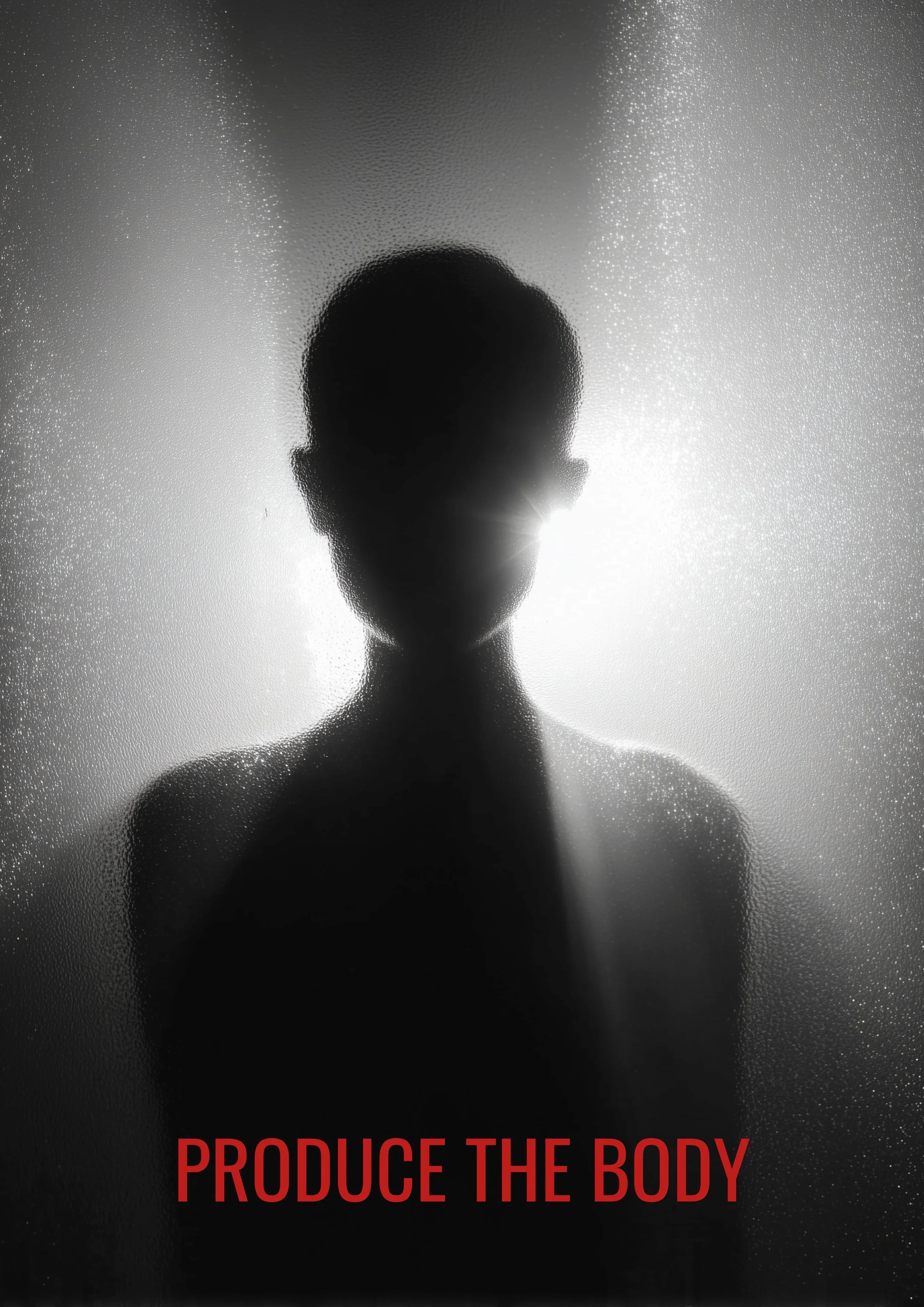
You exist. Therefore, you must be accounted for.
The Question
By what authority?
Once the body is present, power must explain itself.
The courtroom, the empty chair, the illuminated space of judgment, these are not symbols of punishment, but of accountability. Authority must articulate its reasoning. It must justify the deprivation of liberty.
“By what authority?” is not rhetorical. It is constitutional.
In a healthy system, this question is immediate.
In a fragile one, it becomes procedural.
The absence of visible actors in these images reflects a tension: the structures of justice remain, but their moral force depends on whether the question is allowed to be answered honestly.
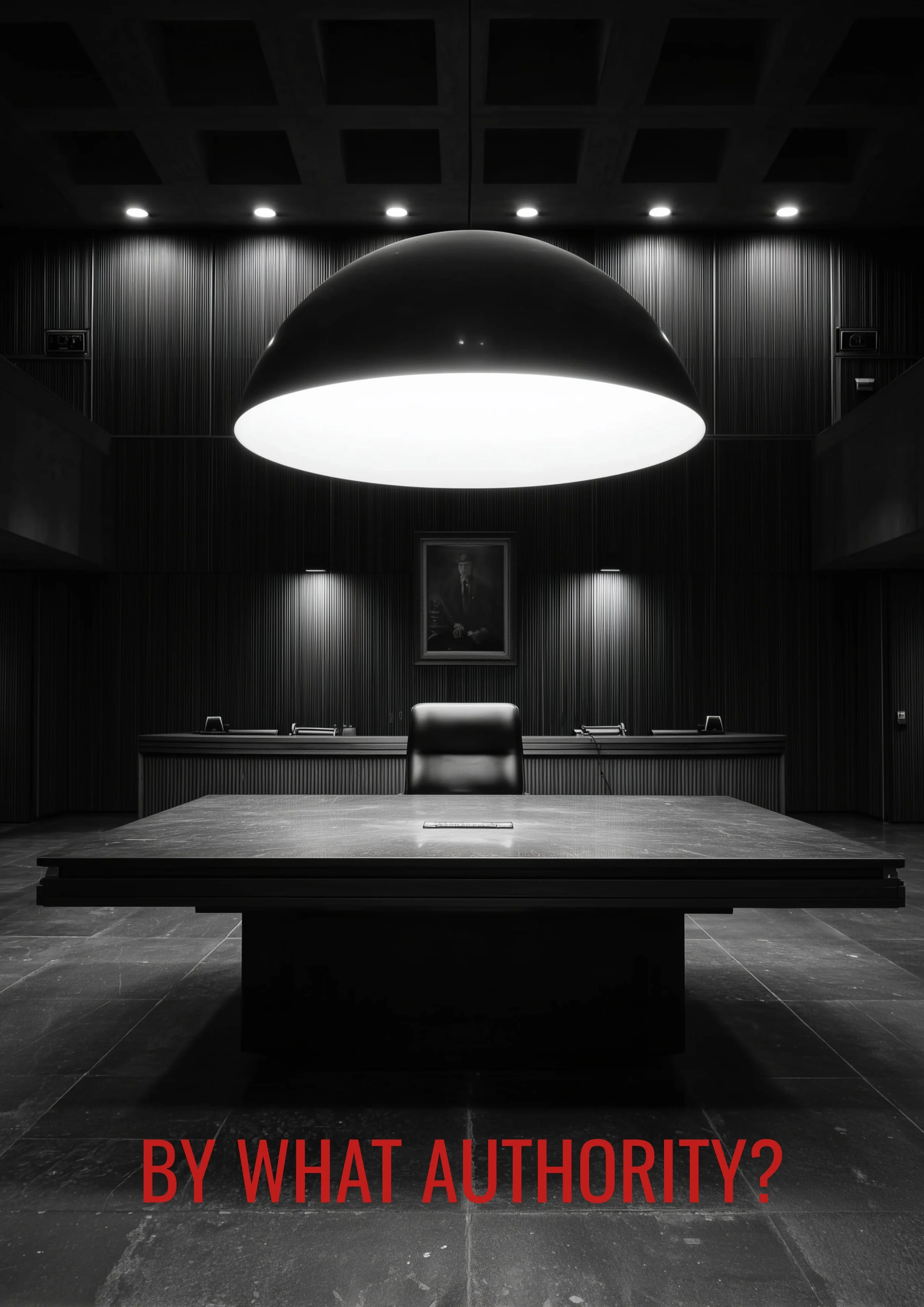
Power must explain itself.
The Delay
Pending Review
Modern erosion does not announce itself. It postpones.
Delay becomes strategy.
Language becomes neutral.
The clock is replaced by status.
“Pending review” appears harmless. Administrative. Technical. Temporary.
But time alters power.
When hearings are delayed, detention lengthens. When processes stall, oversight weakens. The corridor stretches, doors repeat, and resolution recedes.
This is not dramatic authoritarianism.
It is procedural suffocation.

Justice postponed is control perfected.
The Exception
Temporary measures
Habeas corpus rarely dies in darkness.
It dissolves under fluorescent lights.
Every erosion requires justification.
Emergency. Security. Stability.
The language of exception is rarely aggressive. It is framed as protection. It is clean, fluorescent, institutional.
And yet, when an emergency becomes routine, rights adjust downward.
Historically, habeas corpus has been suspended during crises, wars, insurrections, and perceived threats. Each suspension is presented as limited in scope and duration.
The danger is not the exception itself.
It is the normalization of exception.
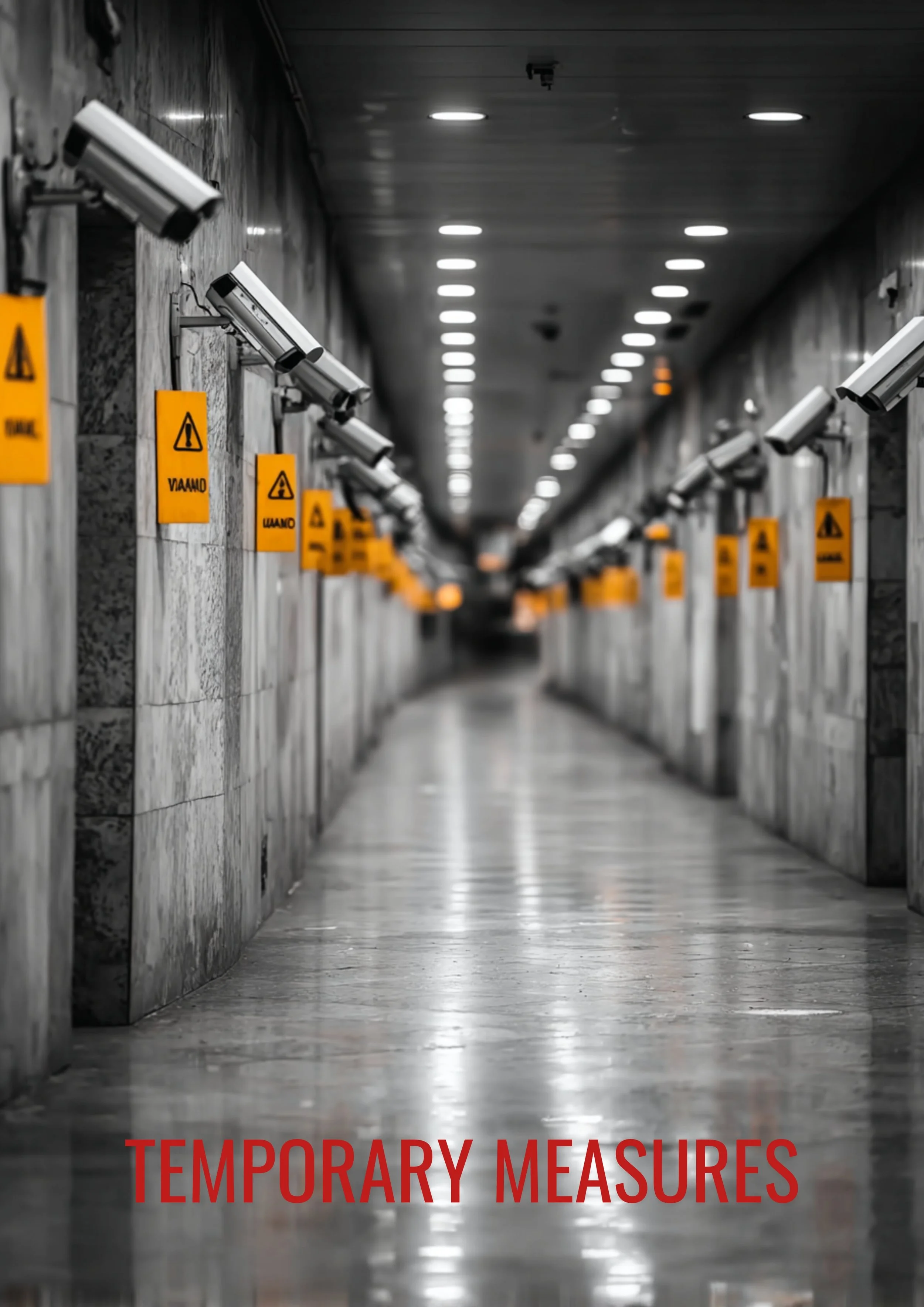
Emergency becomes policy.
The Silence
No hearing scheduled
When the body is no longer required.
This is the quietest stage.
No dramatic announcement.
No formal suspension.
No visible rupture.
Just absence.
When no hearing is scheduled, the structure remains intact, but the individual disappears from it. The language persists, the forms exist, but accountability dissolves.
The images in this final section return to isolation and shadow. The human figure is still present, but institutionally unacknowledged.
Disappearance does not always require force.
It requires indifference.
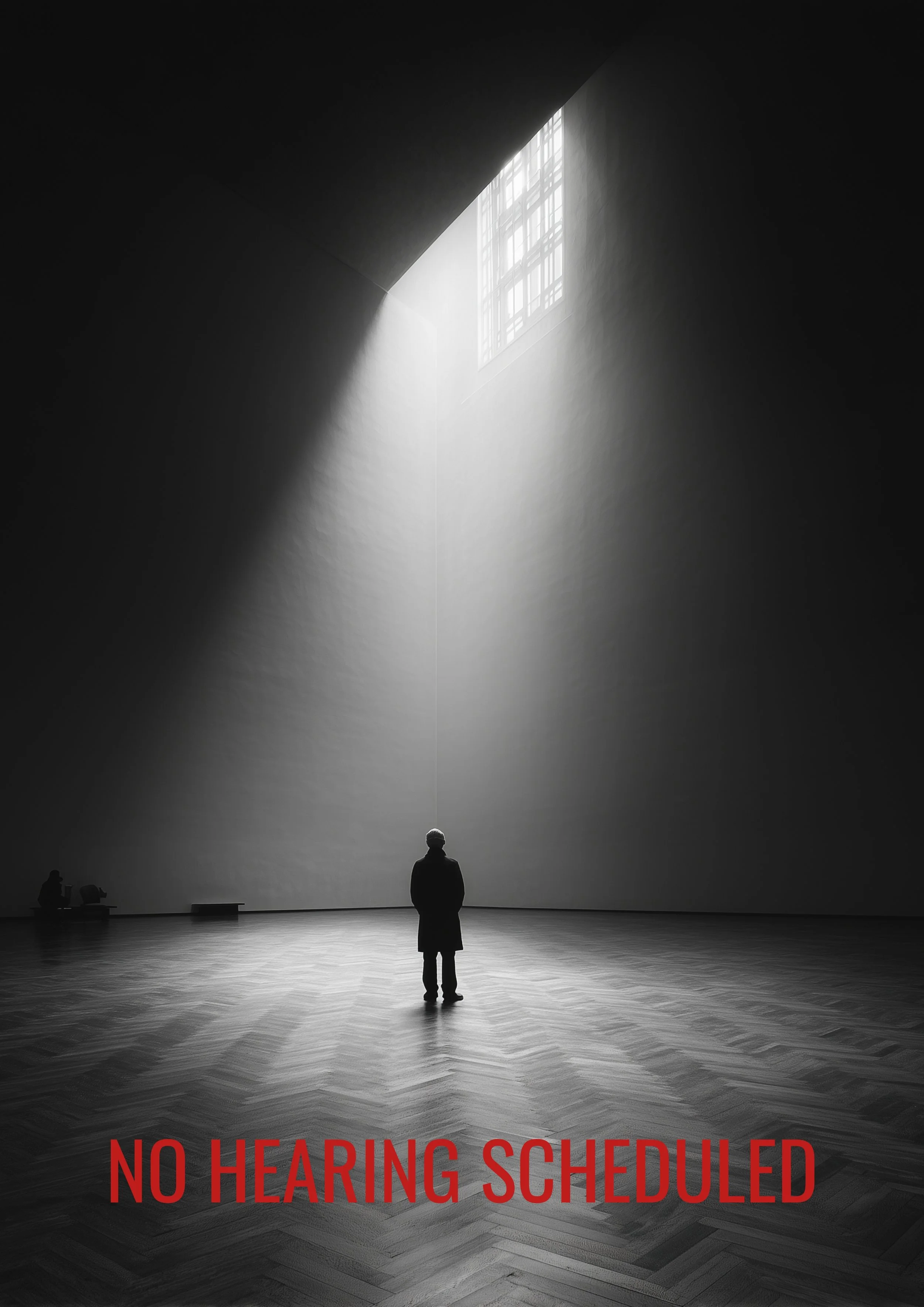
Disappearance does not always require force.
Conclusion
Is habeas corpus still followed?
It’s under pressure, respected on paper, uneven in practice.
Yes, formally, but increasingly weakened in practice, especially in moments of fear: terrorism, migration, national security, pandemics, or “states of emergency.”
In most democratic countries, habeas corpus still exists legally, and courts haven’t vanished. But access is slower, narrower, and more conditional than it used to be.
What’s been happening lately (the pattern)
Across democracies, a few recurring trends show up:
Expansion of “exceptions.”
Governments increasingly rely on:
emergency laws
national security justifications
administrative detention (not criminal court)
These don’t abolish habeas corpus outright, but they delay it, limit it, or make it harder to trigger.
Delays instead of denial
The right still exists, but:
hearings take longer
detainees wait weeks or months
Legal access is restricted
Delay is the new workaround.
Framing matters
Detention is often reframed as:
“Preventive”
“Administrative”
“Temporary for safety.”
This semantic shift matters; it moves people outside the purview of classic criminal protections.
Country-level reality (examples)
Habeas corpus still exists, but has been carved up by national security, immigration detention, and post-9/11 legal frameworks. Non-citizens and “enemy combatant” categories historically faced reduced access.
Formally protected, but states of emergency and anti-terror laws expanded administrative detention and house arrest, reducing immediate judicial oversight in some cases.
The birthplace of habeas corpus still honors it legally, yet counter-terrorism and immigration detention regimes have strained its practical reach.
The pattern isn’t dictatorship-level disappearance.
It’s democratic erosion through legal complexity.
The uncomfortable truth
Habeas corpus doesn’t usually die loudly.
It fades quietly when:
Fear beats principle
Speed beats fairness
“Security” beats liberty
Courts defer instead of challenging.
The danger isn’t suspension — it’s normalization of exceptions.
“When power learns it can detain first and justify later,
the balance has already shifted.”
Practical takeaway
Habeas corpus still exists
It is less accessible for marginalized groups
It is most fragile during crises
Its erosion is usually legal, procedural, and incremental