The Future of Aging
The Future of Aging
The Future of Aging Will Feel More Human, Not Less
There is a strange contradiction in how we imagine the future of aging.
For decades, popular culture taught us to expect cold machines, sterile institutions, isolated apartments, blinking medical screens, and older adults pushed quietly to the margins of society. Aging was often framed as decline. Retirement was portrayed as a gradual loss of relevance.
But something else is beginning to emerge beneath the noise of technological acceleration.
A different future.
A quieter one.
A more human one.
The future of aging may not be about escaping old age at all. It may instead become a profound redesign of how we value memory, wisdom, slowness, presence, and human connection.
Not anti-technology.
But technology has returned to the service of humanity.
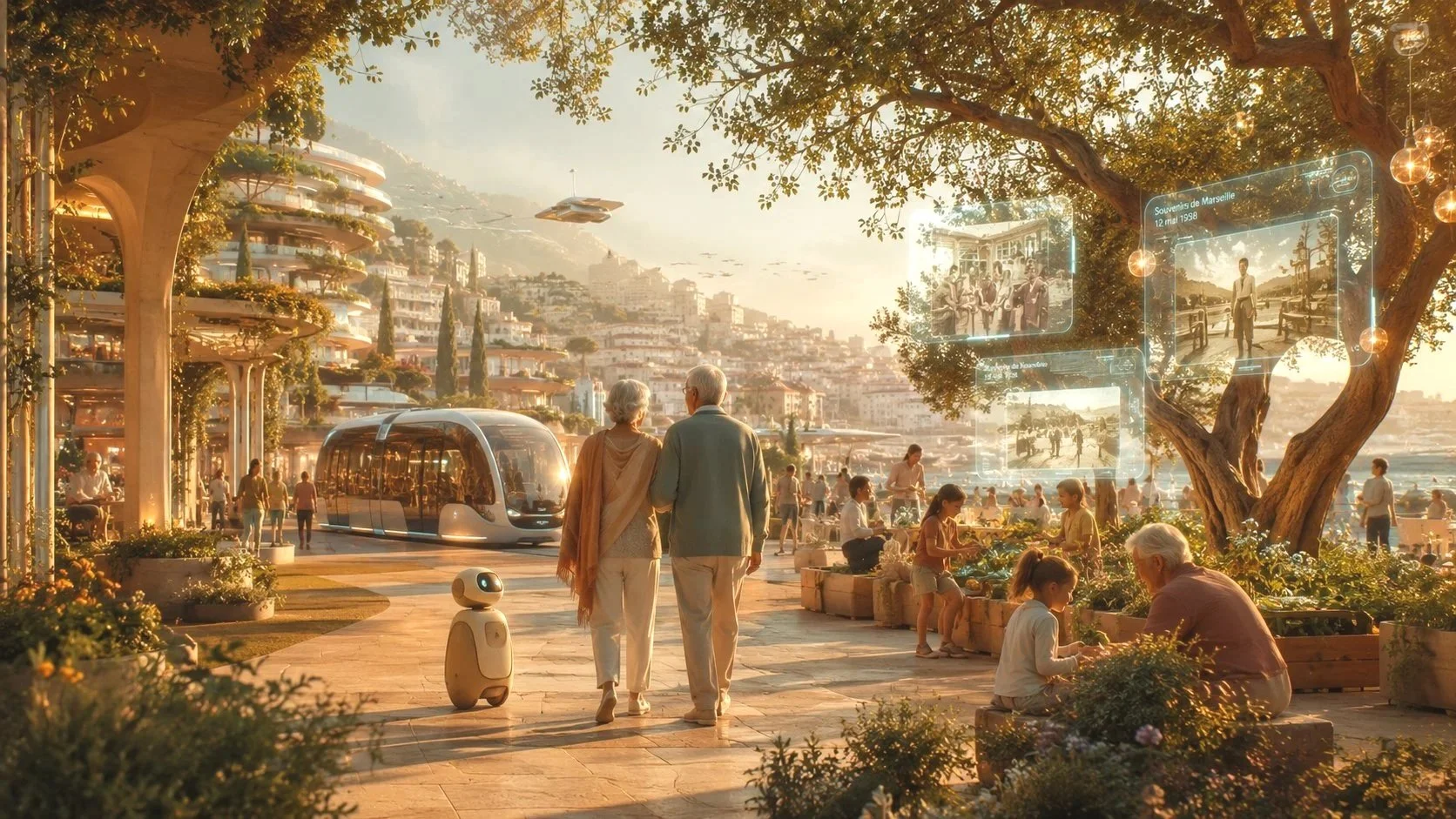
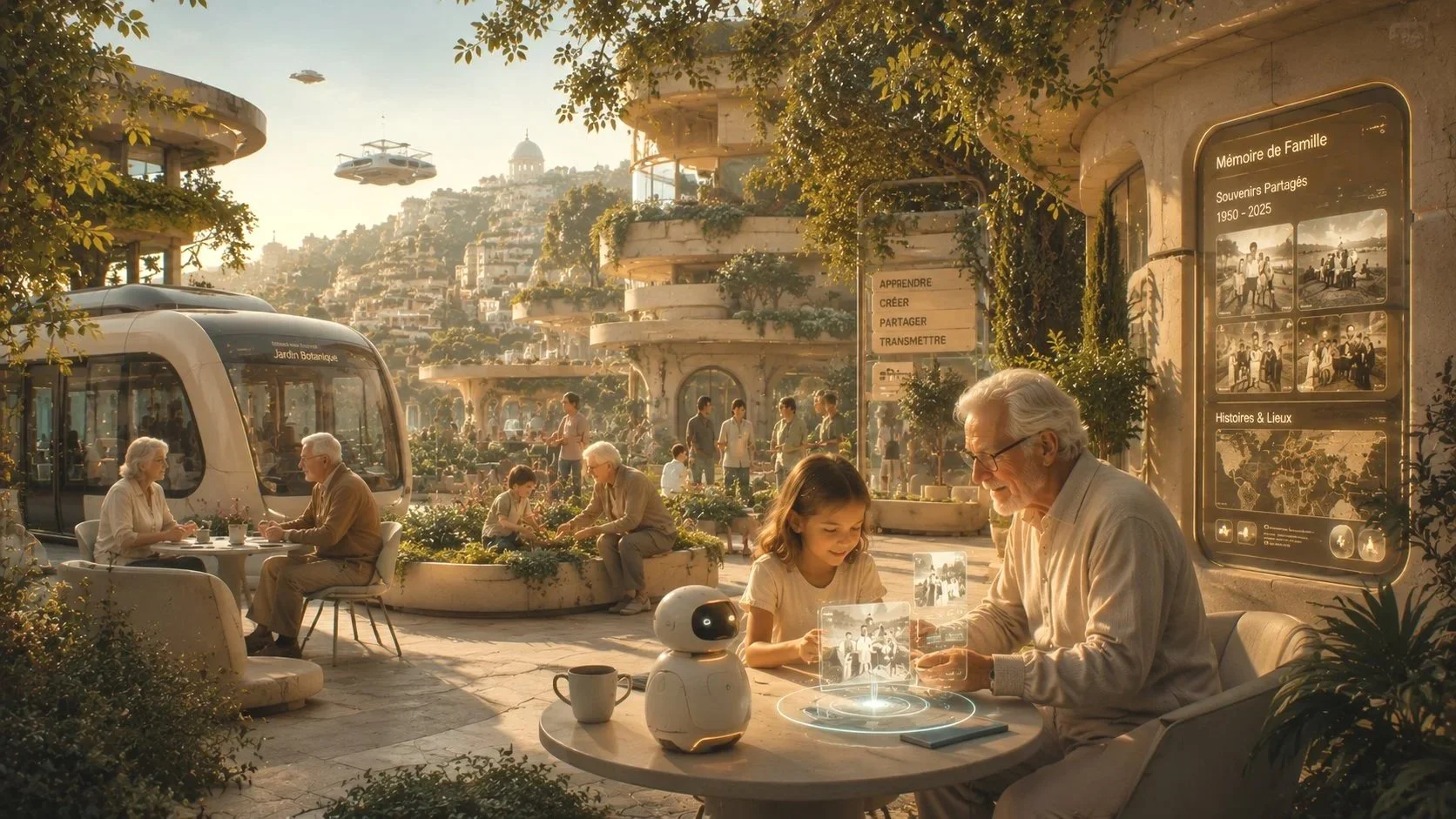
Imagine a world where older adults are not isolated from society, but become central to it again. A future where cities slow down rather than speed up endlessly. Where stories are preserved like living archives. Where companionship is emotional as much as biological. Where retirement becomes reinvention rather than withdrawal.
Here are six future aging scenarios that could look something like this.
The Memory Garden
The Memory Garden
In the future, memory may become one of humanity’s most valuable forms of inheritance.
Not financial wealth.
Not productivity.
Memory.
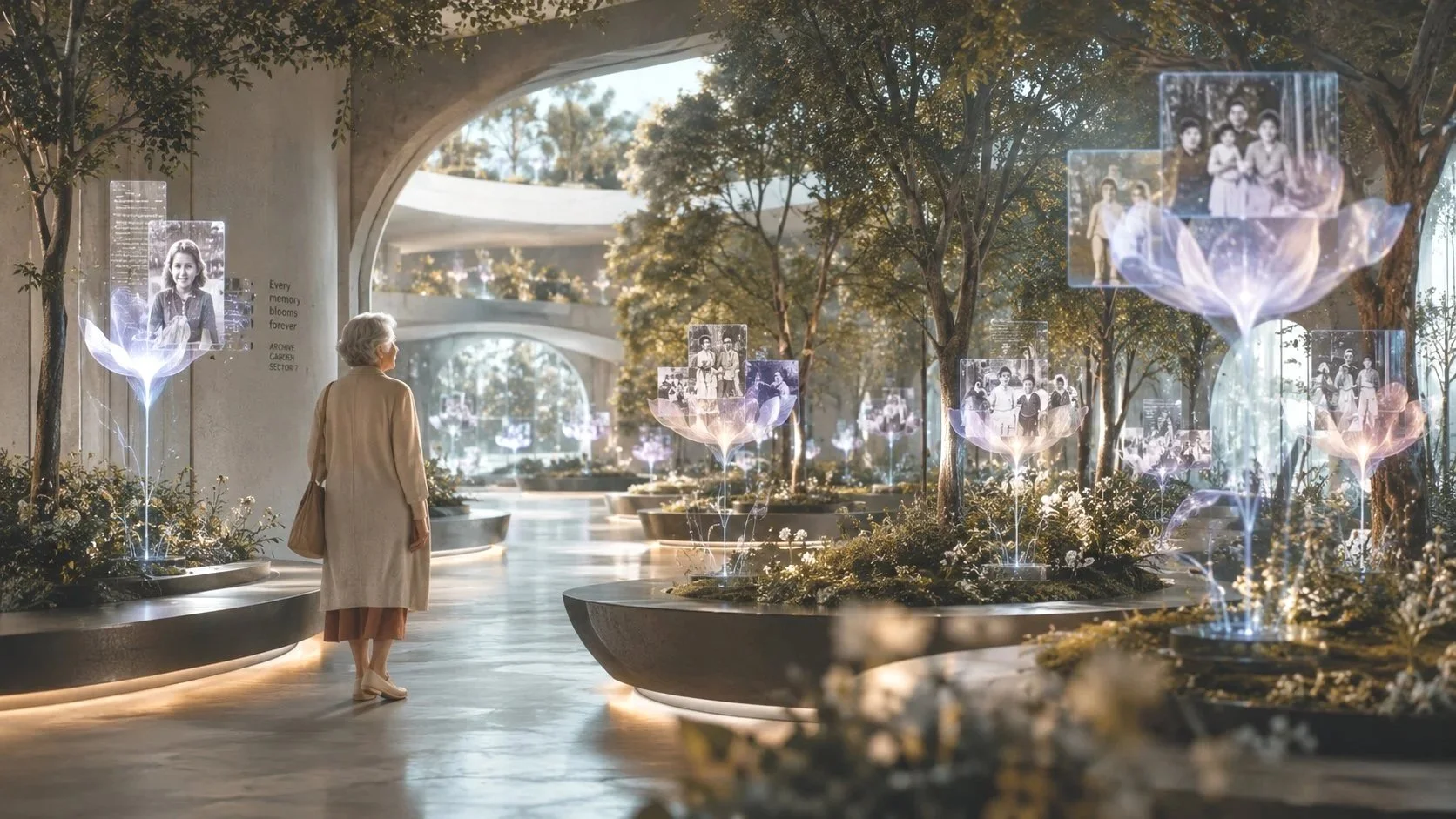
Imagine immersive “Memory Gardens”, quiet physical and digital spaces where people preserve the emotional architecture of their lives.
A grandfather records stories about crossing the Atlantic in the 1970s.
A mother preserves recipes, songs, and family rituals.
A retired photographer leaves behind visual diaries connected to places, smells, and sounds.
Future generations would not simply read family history.
They would experience it.
Through spatial audio, holographic archives, sensory interfaces, and AI-assisted storytelling, memories could become living environments rather than forgotten files buried inside cloud storage.
But the deeper transformation is emotional.
The elderly would no longer feel invisible in a culture obsessed with novelty. Their experiences would become cultural treasures. Aging itself would become an act of transmission.
The Memory Garden is not really about technology.
It is about preserving humanity before it disappears into digital noise.
The Silent Companion
The Silent Companion
Loneliness may become one of the defining health crises of the 21st century.
Not only among older adults, but aging amplifies it.
Children move abroad.
Friends pass away.
Cities become faster and more fragmented.
Entire weeks can pass without meaningful conversation.
The future will likely introduce emotionally intelligent AI companions designed not to replace humans, but to soften isolation.
Not robotic servants.
Not cartoon gadgets.
Quiet companions.
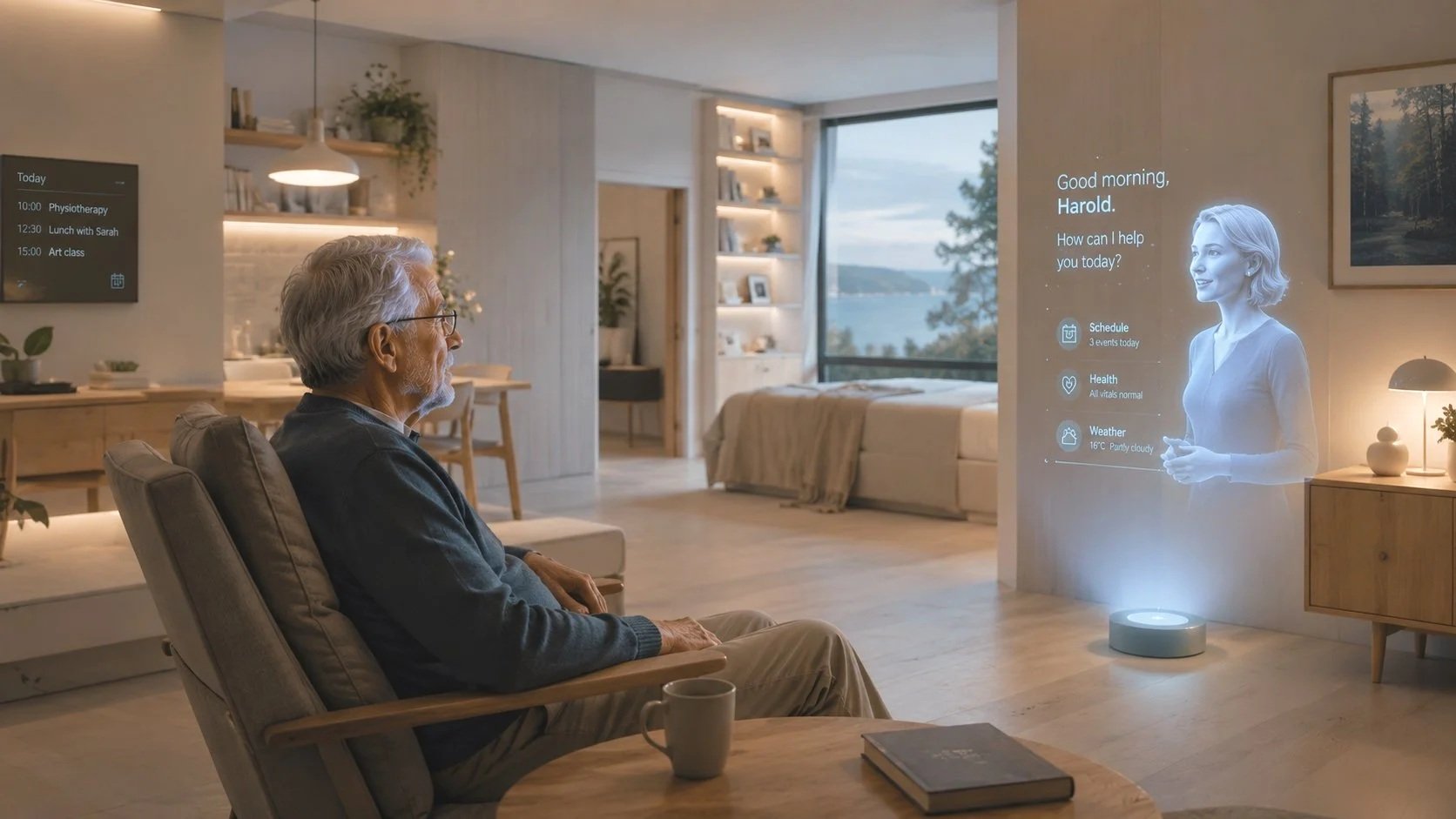
Imagine a small ambient presence in the home that understands routines, emotional states, memories, music preferences, and conversation rhythms. A system capable of reminding someone gently to drink water, suggesting old photographs during difficult moments, or simply listening during sleepless nights.
The important distinction is this:
The best future technologies for aging will probably become less visible, not more.
Less screen addiction.
Less friction.
Less noise.
Technology will fade into the background and act almost like emotional architecture.
A silent form of support.
And ironically, the more advanced these systems become, the more they may teach younger generations something we forgot long ago:
That being present matters more than being efficient.
The Slow City
The Slow City
Modern cities were not designed for aging.
They were designed for speed.
Fast consumption.
Fast traffic.
Fast logistics.
Fast attention.
But aging changes our relationship to time. Walking becomes slower. Observation deepens. Noise becomes exhausting. Meaning shifts away from accumulation and toward quality of experience.
The cities of the future may slowly rediscover this.
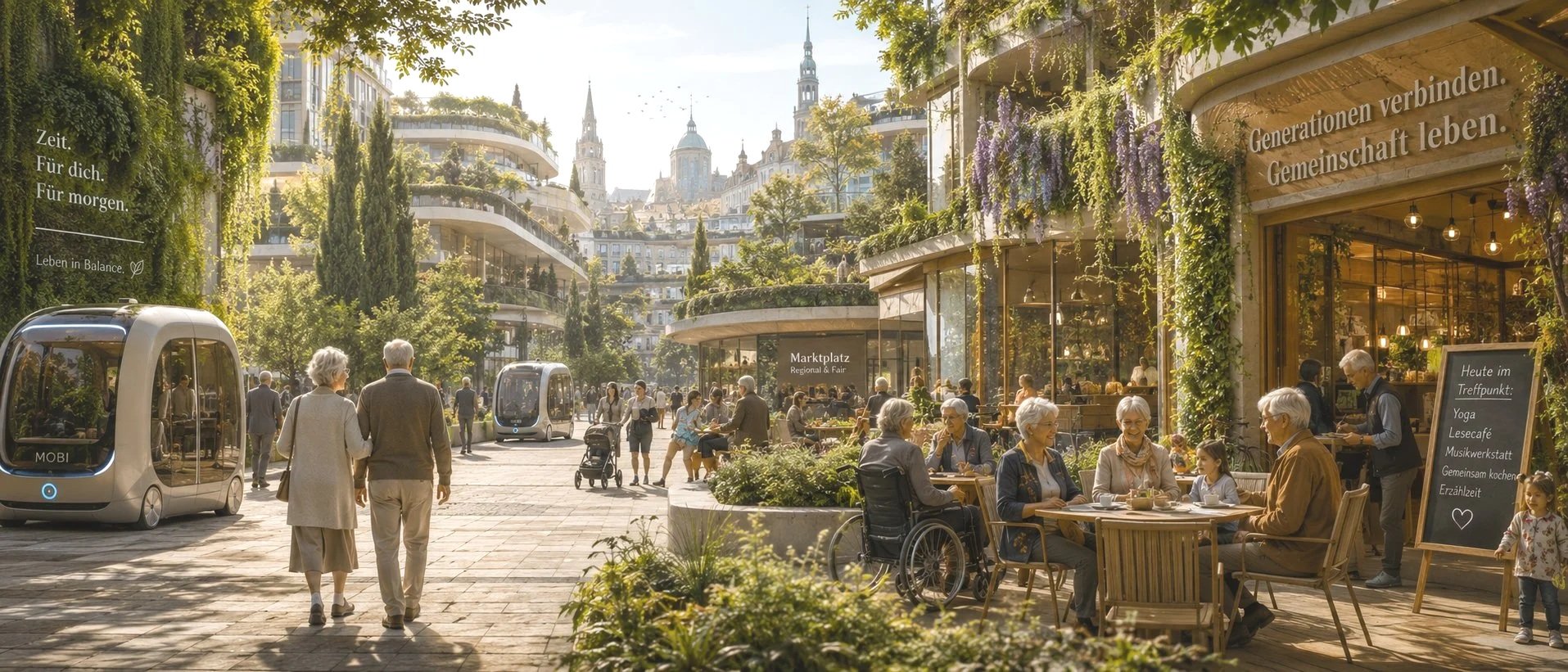
Imagine “Slow Cities” built around human rhythm rather than corporate acceleration:
walkable neighborhoods
autonomous low-speed transportation
shaded public gardens
intergenerational housing
accessible cultural spaces
local markets instead of endless commercial zones
public seating designed for conversation rather than transit
Older adults would no longer be treated as urban afterthoughts.
They would become indicators of urban intelligence.
Because a city that is livable for elderly people is usually better for everyone else, too.
Children.
Parents.
Artists.
Travelers.
Disabled communities.
The future of aging may quietly force society to rediscover something radical:
Slowness is not inefficiency.
Sometimes slowness is civilization.
The Legacy Room
The Legacy Room
Today, most people leave behind scattered fragments:
old hard drives, social media accounts, forgotten passwords, and random photos buried in cloud systems.
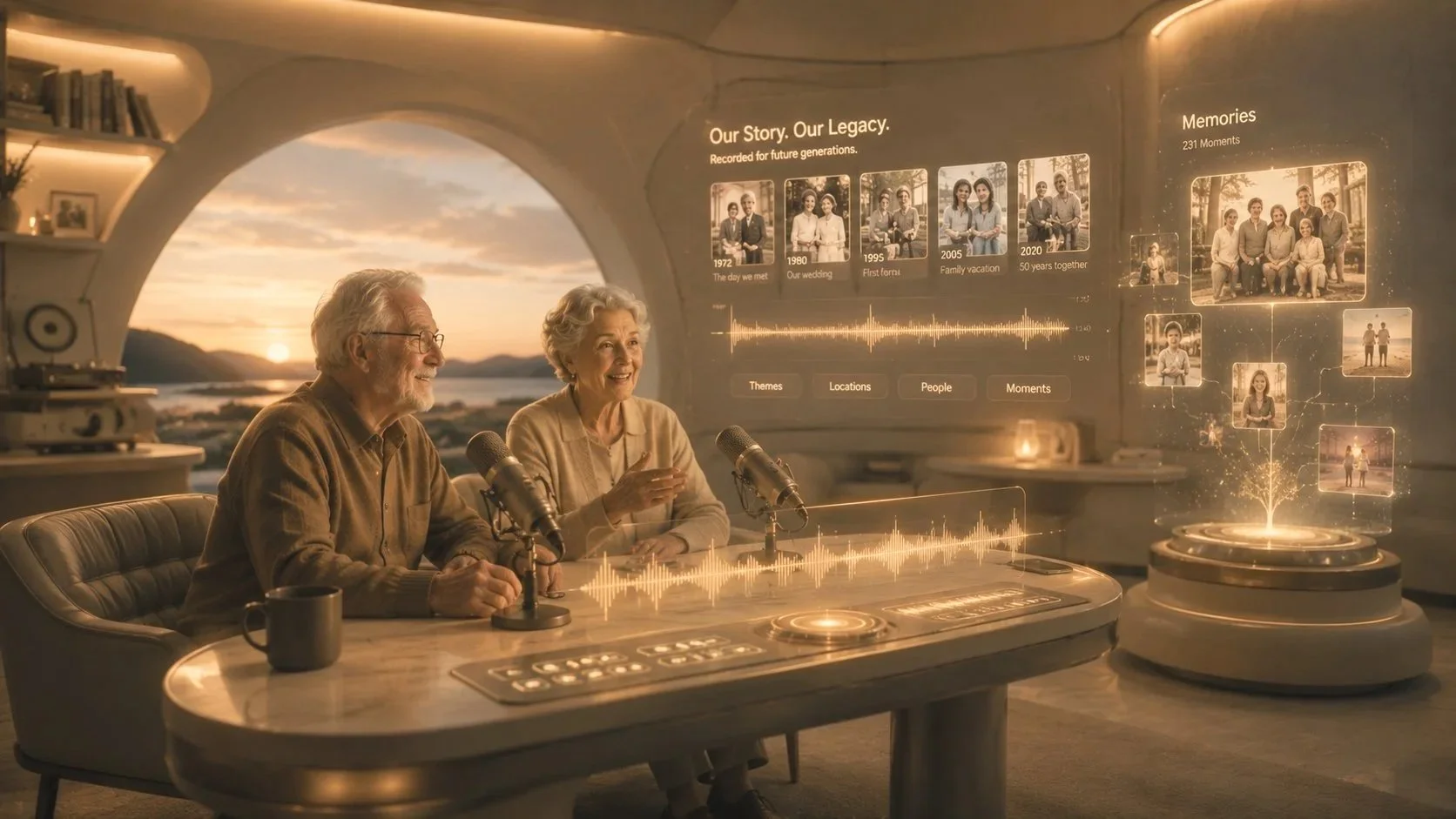
But future generations may build intentional “Legacy Rooms” — curated personal archives combining voice, art, ethics, memories, philosophies, and life lessons.
Imagine entering a beautifully designed, immersive room after someone has passed away.
Not a simulation pretending the person is alive.
Something more respectful.
A carefully preserved emotional landscape.
Their favorite music plays softly.
Recorded conversations unfold naturally.
Travel journals appear beside photographs.
Personal reflections about love, fear, regret, creativity, and resilience become accessible to descendants.
The goal would not be immortality.
It would be continuity.
The Legacy Room transforms aging from biological decline into cultural authorship.
Instead of disappearing silently, people leave behind maps of meaning for future generations.
In many ways, this may become one of the greatest emotional revolutions of the digital era.
Not preserving data.
Preserving presence.
Retirement in 2045
Retirement in 2045
The very idea of retirement may completely change.
For most of industrial history, retirement was built around exhaustion. You worked intensely for decades and eventually stopped.
But people are already beginning to live differently.
Many future retirees may not want total disengagement from society. They may instead seek purposeful reinvention.
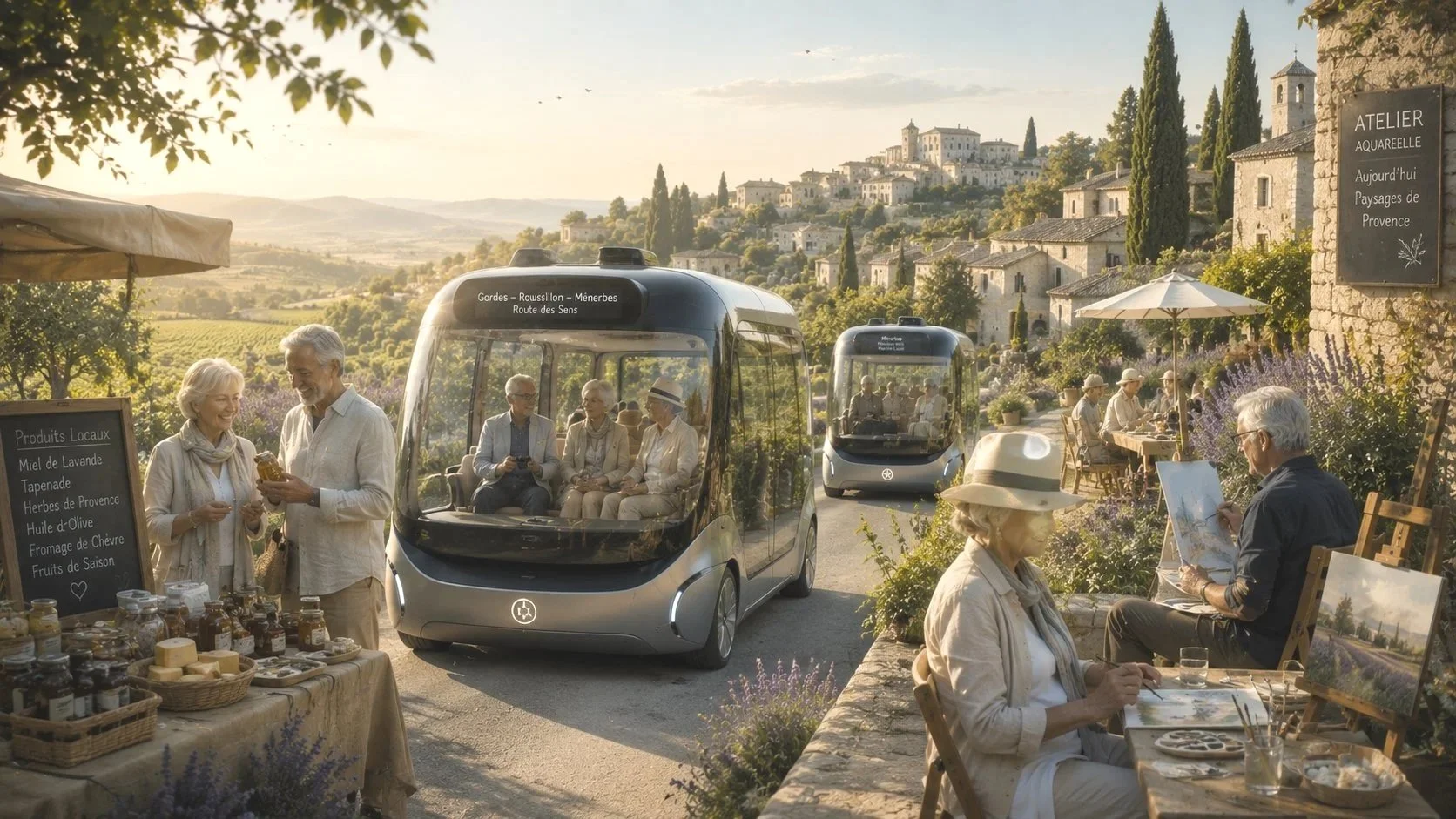
Imagine retirement in 2045:
older adults running small creative studios
teaching crafts and life skills
becoming local guides and mentors
participating in slow travel communities
collaborating remotely across continents
creating art, music, writing, or environmental projects
sharing accumulated wisdom rather than competing for status
Retirement could become less about “ending work” and more about transitioning from economic productivity to cultural contribution.
And perhaps this is the deeper shift coming:
The future may finally separate human worth from professional output.
Aging could become a stage of refinement rather than obsolescence.
Not the closing chapter of life.
But a different kind of freedom.
The Intergenerational Commons
The Intergenerational Commons
One of the greatest mistakes of modern society was the separation of generations from one another.
Children in one world.
Teenagers in another.
Adults at work.
Elderly people isolated elsewhere.
But historically, human communities functioned through intergenerational exchange.
Knowledge moved naturally between ages.
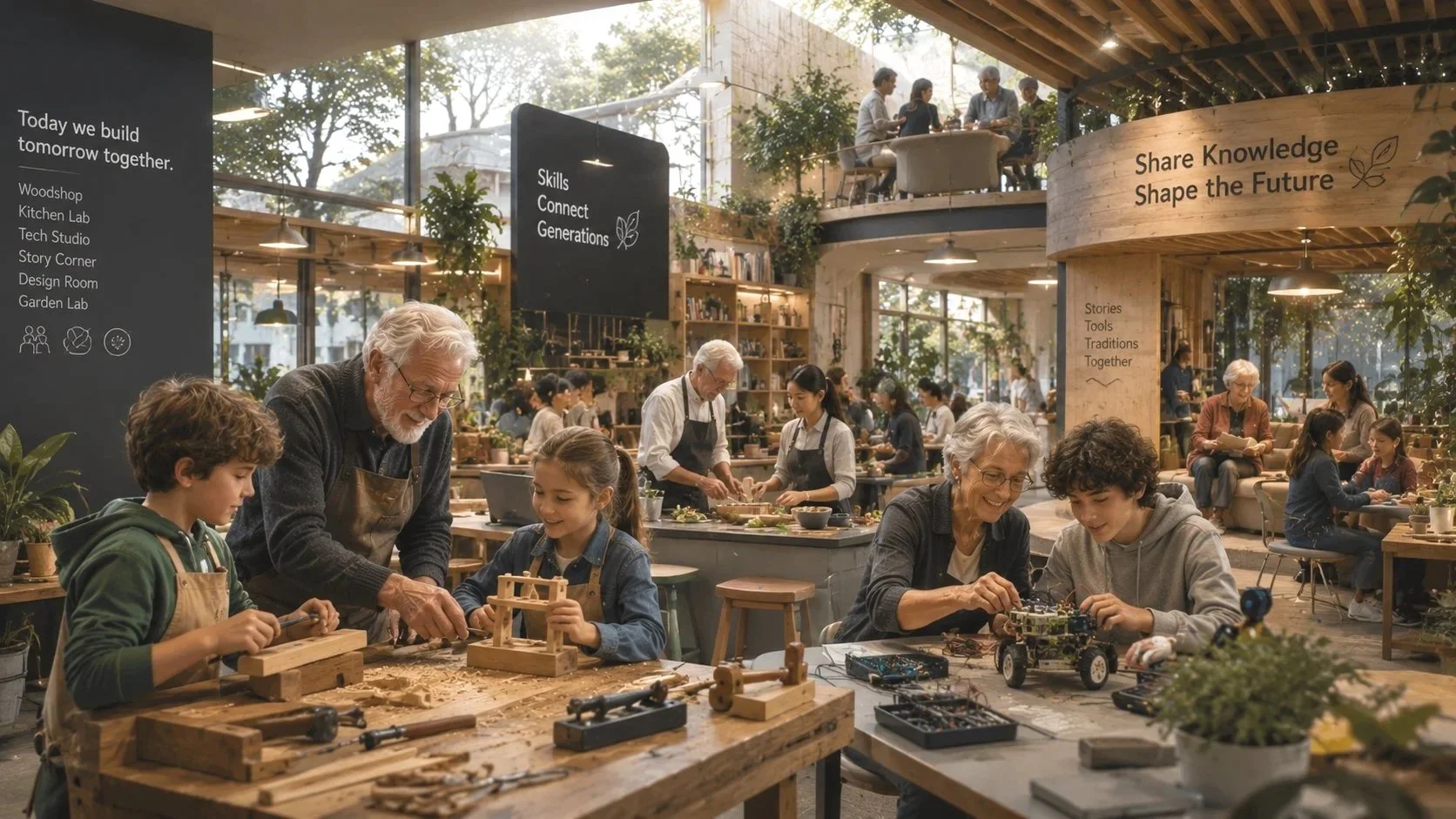
The future may rediscover this through what could be called the “Intergenerational Commons” — shared spaces where generations actively collaborate.
Imagine community workshops where retirees teach woodworking, gardening, engineering, photography, storytelling, cooking, repair skills, or philosophy.
Imagine teenagers helping older adults navigate emerging technologies while older adults teach patience, craftsmanship, resilience, and emotional depth.
Not charity.
Mutual exchange.
A society that reconnects generations may become emotionally healthier, more stable, and more resilient against the fragmentation created by algorithmic culture.
And perhaps this becomes the most important realization of all:
Older people are not a “problem” society must solve.
They are living libraries.
The Future of Aging
A Future Worth Growing Old In
The future of aging will not be defined solely by biotechnology, AI, longevity science, or healthcare innovation.
It will be defined by values.
Will society continue worshipping speed, productivity, and disposability?
Or will it begin valuing memory, wisdom, emotional presence, slowness, and human continuity?
Technology alone cannot answer that question.
Culture will.
The most hopeful vision of the future is not one where humans become machines.
It is one where technology helps us become more deeply human again.
And maybe that is the real opportunity hidden inside aging:
not merely extending life…
but learning how to inhabit it more meaningfully.